TL;DR: Created by Stan Lee and Jack Kirby in 1963, Max Eisenhardt evolved from a flat Silver Age villain into Marvel’s richest tragic figure. Shaped by Holocaust survival and anti-mutant persecution, the Master of Magnetism has served as terrorist, headmaster, king, and reluctant hero across sixty years of comics.
Few comic-book characters carry as much moral weight as Magneto. What started in 1963 as a brightly costumed menace shouting about mutant supremacy grew over six decades into one of modern fiction’s sharpest explorations of trauma, resistance, and survival.
If you’ve only watched the X-Men movies or animated series, you already know his signature helmet and his rivalry with Charles Xavier. In this complete guide to Magneto comics history, you’ll trace how writers transformed Max Eisenhardt from a one-dimensional antagonist into a school headmaster, a sovereign ruler, and a fallen martyr—and you’ll learn exactly which issues to read first.
Quick Overview
- Real Name: Max Eisenhardt (aliases include Erik Magnus Lehnsherr and Magnus)
- Creators: Stan Lee and Jack Kirby
- First Appearance: The X-Men #1 (September 1963)
- Core Abilities: Omega-level manipulation of magnetism and the entire electromagnetic spectrum
- Key Affiliations: Brotherhood of Evil Mutants, Hellfire Club, X-Men, New Mutants, Acolytes, Genosha, Quiet Council of Krakoa, Great Ring of Arakko
- Defining Storylines: Uncanny X-Men #150, God Loves, Man Kills, Fatal Attractions, House of M, Classic X-Men #12, House of X, and X-Men Red
Who Is Magneto and Why Does His Story Matter?
Definition: Born Max Eisenhardt, the Master of Magnetism is a fictional Marvel Comics mutant and Omega-level commander of electromagnetic forces whose survival of the Nazi Holocaust fuels his militant vow to protect mutantkind from human persecution by any means necessary.
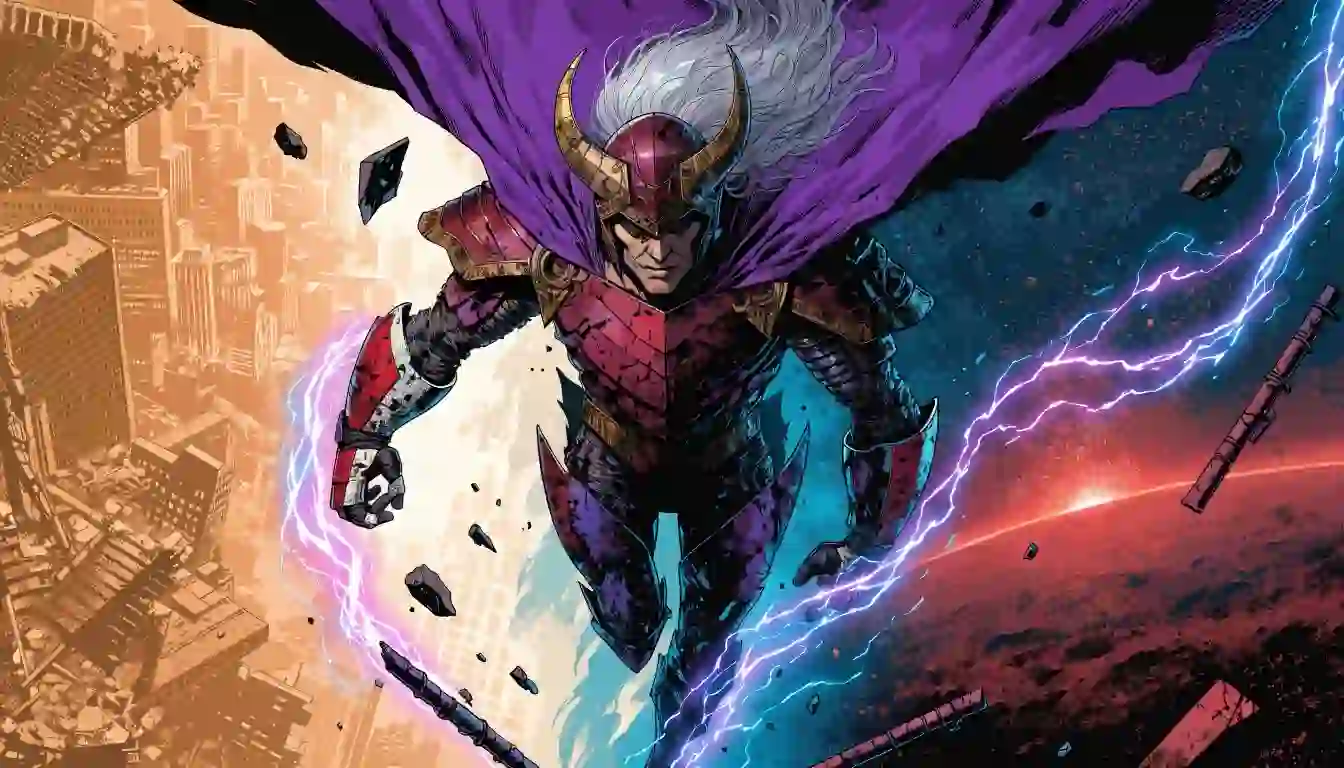
At first glance, the Master of Magnetism looks like a straightforward superhero adversary. He wears a dramatic crimson-and-violet uniform, floats effortlessly above battlefields, and bends steel bridges like wet clay. Yet beneath the comic-book spectacle lies a question that still divides readers today: how far should a threatened minority go to guarantee they’re never hunted again?
That question is why his arc refuses to age into simple hero-versus-villain nostalgia. While Charles Xavier preaches patience, assimilation, and peaceful coexistence, Max looks at recorded history and sees an unbroken cycle of fear turning into state-sponsored slaughter. Neither man is purely right or purely naive, which gives every quiet conversation between them electric tension.
Cultural critics and comic historians often compare the Xavier-and-Magnus divide to competing philosophies within real-world civil rights struggles. Xavier hopes society will eventually honor its promises, while Magnus insists survival can’t depend on a fearful majority’s goodwill. Even when you recoil from his brutality, you’re forced to recognize the grief that forged it.
How Did Silver Age Comics First Introduce Him in 1963?
Stan Lee and Jack Kirby launched The X-Men #1 in September 1963 with a clean, urgent premise. Five teenage mutants trained by a wheelchair-using telepath stood against an older, ruthless mutant determined to conquer humanity. That antagonist walked onto the Cape Citadel military base, redirected missiles in midair, and declared that Homo superior would soon inherit the Earth.
In those earliest issues, there wasn’t much psychological nuance to uncover. The villain spoke in grand, theatrical monologues, threatened nuclear arsenals, and treated his own subordinates like disposable pawns. When he assembled the Brotherhood of Evil Mutants in The X-Men #4 (1964), he recruited Quicksilver, the Scarlet Witch, Toad, and Mastermind largely through intimidation and bullying.
From Asteroid M to Infant Regression
Kirby and Lee leaned heavily on cosmic and sci-fi spectacle throughout the 1960s. In The X-Men #5, the warlord unveiled Asteroid M, an orbital fortress circling the Earth where mutants could gather beyond human laws. Later Silver Age tales sent him to the Savage Land in The X-Men #62–63, where he engineered artificial mutates, and pitted him against both the Avengers and the Fantastic Four.
By the early 1970s, however, the character had hit an unmistakable creative wall. Without personal motivation or believable stakes, his constant schemes to rule the planet started feeling repetitive and hollow. In The Defenders #15–16 (1974), writer Len Wein even had a cosmic being named Alpha the Ultimate Mutant devolve him into a helpless infant, seemingly sweeping him off the Marvel chessboard for good.
The Quiet Wait Before Reinvention
Three years later, in Uncanny X-Men #104 (1977), the alien agent Erik the Red restored the mutant warlord to his physical prime. Even then, he initially acted like the same towering menace who had battered the original five X-Men—going so far as to trap the team beneath an Antarctic volcano in Uncanny X-Men #112–113. Nobody reading those issues in the late 1970s suspected that a landmark shift in comic-book characterization was only a few years away.
How Did Chris Claremont Rewrite His Origin in the 1980s?
Everything changed when writer Chris Claremont and artist Dave Cockrum decided to treat the character as a wounded human being rather than a mustache-twirling tyrant. In Uncanny X-Men #150 (1981), the villain hijacks a Soviet nuclear submarine and demands global disarmament under threat of catastrophic magnetic storms. That sounds like a classic Silver Age plot until the final act shatters the formula.
During a fierce battle at his volcanic island fortress in the Bermuda Triangle, he lashes out at fourteen-year-old Kitty Pryde and leaves her near death. When he realizes the girl is Jewish—and recognizes the horrifying irony that his pursuit of mutant supremacy has turned him into a mirror of the Nazis who butchered his family—he freezes in place. For the first time in mainstream superhero comics, the Master of Magnetism lowers his fists, whispers an apology, and lets his enemies walk away.
Uncovering Max Eisenhardt’s Past
Over the next decade, Claremont steadily filled in the tragic backstory behind that sudden breakdown. In Uncanny X-Men #161 (1982), readers traveled back to Haifa, Israel, where a haunted man calling himself Magnus worked as an orderly at a psychiatric clinic for Holocaust survivors. There, he met and debated human nature with a young Charles Xavier long before either man put on a costume, teaming up to stop Hydra leader Baron Wolfgang von Strucker.
Later backup stories in Classic X-Men #12 (1987) and #19 (1988), expanded decades later by Greg Pak’s acclaimed 2008 five-issue origin miniseries, cemented the full timeline. Born Max Eisenhardt to a middle-class Jewish family in Nuremberg, Germany, he endured the Nuremberg Laws, survived the Warsaw Ghetto, and was forced to work in the Sonderkommando unit inside Auschwitz. After escaping the camp during the 1944 uprising alongside his childhood sweetheart, a Romani girl named Magda, he lost his young daughter Anya to a mob-set house fire in Vinnytsia when his magnetic powers violently erupted for the first time.
How His Ideology Actually Works
To understand why Max Eisenhardt behaves the way he does across eras, look at the psychological chain reaction Claremont built for him. Almost every major choice he makes follows four consistent principles:
- Historical Memory: Having watched ordinary neighbors turn into killers during the 1930s and 1940s, Max refuses to trust laws, courts, or treaties written by a human majority.
- Preemptive Deterrence: Instead of waiting for anti-mutant camps or giant Sentinel robots to deploy, he strikes first with overwhelming force to prove that attacking mutants carries an unbearable cost.
- Separate Sovereignty: Whether on Asteroid M, Genosha, or Krakoa, he repeatedly builds physical sanctuaries where mutants govern themselves without asking human nations for permission.
- Moral Friction: Because he still remembers his own humanity—and Xavier’s friendship—he frequently stops just short of crossing into true genocide, creating endless inner turmoil.
What Happened When He Tried to Be a Hero and Headmaster?
If Uncanny X-Men #150 cracked the door open, Marvel Graphic Novel #5: God Loves, Man Kills (1982) kicked it straight off its hinges. In that landmark story by Claremont and Brent Anderson, Reverend William Stryker’s religious zealots murder mutant children and kidnap Professor Xavier to broadcast a lethal psychic wave. Seeing the existential threat, Magnus rescues the young heroes and fights side by side with the X-Men for the very first time.
That reluctant truce soon evolved into one of the boldest status-quo shifts Marvel had ever attempted. In Uncanny X-Men #199–200 (1985), Magnus willingly surrenders to stand trial before an international tribunal in Paris for his past crimes, hoping to prove mutants deserve fair justice. When Nazi-affiliated twins Fenris attack the courtroom and leave Xavier gravely injured, the dying telepath begs his oldest friend to take care of his students.
Leading the New Mutants
Honoring that deathbed promise, the former conqueror put away his crimson armor, adopted the civilian alias Michael Xavier, and became headmaster of Xavier’s School for Gifted Youngsters. Across New Mutants #35–74, readers watched a stern, grieving survivor try to mentor terrified teenagers without turning them into hardened soldiers. He genuinely cared for students like Cannonball, Dani Moonstar, Wolfsbane, and Illyana Rasputin, yet his hypervigilance never truly slept.
When the Marauders massacred hundreds of underground Morlocks beneath New York during the Mutant Massacre (1986), the headmaster’s hard-won patience began to crack. Secretly joining the morally compromised Hellfire Club as its White King—and later Grey King—he watched anti-mutant hysteria surge across the globe while Xavier remained off-planet in Shi’ar space. By the end of the 1980s, grief, paranoia, and the loss of his students’ trust pushed him back toward radical isolation.
Why Were the 1990s His Most Brutal and Controversial Era?
In 1991, Chris Claremont and superstar artist Jim Lee launched X-Men #1, which remains the best-selling single comic issue in American publishing history. That three-part “Mutant Genesis” arc restored the crimson-armored warlord to full militant fury atop a newly built Asteroid M. When United Nations satellites fired orbital weapons at his haven, he abandoned peace talks and declared open hostility against the surface world once again.
Two years later came Fatal Attractions (1993), a crossover that delivered one of the most shocking splash pages of the entire decade. After Magnus unleashed a planet-wide electromagnetic pulse from his orbital fortress Avalon—crippling global infrastructure and causing mass casualties—the X-Men launched a desperate assault on his station. When Wolverine slashed his chest in X-Men #25, the enraged mutant seized the metal inside Logan’s body and ripped every ounce of adamantium straight out through his pores.
Mindwipes, Onslaught, and Clones
Horrified by Wolverine’s near-death, Charles Xavier broke his own deepest ethical rule and forcibly shut down his adversary’s conscious mind, leaving him comatose aboard Avalon. That psychic assault carried catastrophic unintended consequences, fusing Xavier’s repressed anger with Magnus’s darkest instincts to spawn the monstrous psionic entity Onslaught in 1996. Meanwhile, an amnesiac, de-aged clone named Joseph appeared—crafted by the rogue mutant Astra—wearing the mantle of a repentant hero and briefly serving with the X-Men before sacrificing his life to repair Earth’s damaged magnetic field.
The real Erik Lehnsherr returned with terrifying clarity in 1999’s Genosha ultimatum crossover. Threatening to reverse Earth’s magnetic poles unless mutantkind received an undisputed homeland, he backed the United Nations into an impossible corner. To prevent global extinction, world leaders signed a historic treaty ceding sovereignty of the island nation of Genosha—a former apartheid state built on mutant slave labor—directly into his hands.
How Did Family Ties Shape His Complex Moral Code?
Before diving into the catastrophes of the 2000s, you can’t understand Max Eisenhardt without looking at his tangled, heartbreaking family tree. Across decades of comics, few relationships have exposed his hypocrisy—and his capacity for tenderness—like his bonds with his children. Even when he claims to fight for all mutants, his personal failures as a father repeatedly undermine his grandest dreams.
Quicksilver, Scarlet Witch, and Polaris
For more than thirty years, Pietro Maximoff (Quicksilver) and Wanda Maximoff (the Scarlet Witch) were written as Magnus’s twin children, raised in Eastern Europe by Bova and the Maximoffs after Magda fled in terror from her husband’s powers. That revelation, cemented in the early 1980s, added bitter tragedy to their earlier Silver Age servitude in the Brotherhood of Evil Mutants. Max desperately wanted Pietro’s loyalty and Wanda’s awe, yet his cold authoritarianism pushed both twins straight into the ranks of the Avengers.
His other surviving child, Lorna Dane (Polaris), inherited his exact electromagnetic mutation along with his emerald hair in Uncanny X-Men #431 (2003). Unlike Wanda and Pietro, Lorna spent years wrestling directly with the temptation to embrace his ruthless pragmatism, especially after witnessing Genosha’s devastation firsthand. Even though Marvel later retconned Wanda and Pietro’s genetic parentage during 2014’s AXIS—revealing they were modified by the High Evolutionary rather than sired by Max—the emotional father-daughter bond between Max and Wanda stayed intact, culminating in heartfelt reconciliation during Leah Williams’s 2021 Krakoan murder-mystery miniseries.
How Did Genosha, House of M, and Modern Runs Shape His Legacy?
For a fleeting moment at the turn of the millennium, Genosha looked like the answer to every prayer Max Eisenhardt had ever whispered. Millions of mutants immigrated to the island, rebuilding shattered cities into a proud cultural capital under his stern, protective rule. Then writer Grant Morrison and artist Frank Quitely obliterated that sanctuary in New X-Men #115 (2001).
Orchestrated by Charles Xavier’s parasitic twin Cassandra Nova, gigantic Wild Sentinels descended onto Genosha without warning and slaughtered sixteen million mutants in mere minutes. Max’s defiant voice echoed across a broken radio signal as the city turned to glass, instantly transforming him in the eyes of young mutants from an aging warlord into a prophetic martyr. T-shirts bearing his silhouette and a blunt slogan claiming he had been right all along began appearing in mutant neighborhoods, worn by angry teenagers convinced Xavier’s peaceful dream had burned alongside Genosha.
Reality Shattered in House of M
Although Max survived Genosha’s ruins—later teaming up with Xavier in Excalibur Vol. 3 to bury the dead—deeper heartbreak waited in House of M (2005). When Wanda Maximoff suffered a devastating mental breakdown and rewrote global reality so mutants became the ruling majority, Magnus sat on the royal throne of Genosha as Earth’s supreme monarch. Yet when Wolverine and Layla Miller restored the Avengers’ and X-Men’s lost memories, an outraged father confronted Pietro for manipulating Wanda’s fragile mind.
Driven past her breaking point by her father’s obsession with mutant dominance over his own flesh and blood, Wanda uttered three words that reshaped Marvel publishing for a decade: “No more mutants.” In a single flash of white light, more than ninety percent of the world’s mutants lost their X-gene, including Max himself. Watching a proud, godlike warrior reduced to an ordinary aging man forced writers to explore what remained of his character when his fists lost their thunder.
Redemption on Utopia and the Solo Vigilante Era
By the late 2000s, the High Evolutionary restored Max’s powers, yet the man who walked onto the mutant island sanctuary of Utopia in Uncanny X-Men #516 (2009) had changed profoundly. Recognizing that Cyclops was now carrying the survival of an endangered species on his shoulders, the elder statesman knelt in front of Scott Summers and pledged his loyalty. Soon after, in Uncanny X-Men #522, he risked fatal physical exhaustion to summon a colossal alien bullet back from deep space and rescue Kitty Pryde—finishing the apology he had started nearly thirty years earlier in issue #150.
Then came one of the sharpest character reinventions of the 2010s: writer Cullen Bunn and artist Gabriel Hernandez Walta’s 21-issue noir solo series (2014–2015). Operating mostly alone in a sleek black costume while his powers remained severely weakened from the Phoenix Force’s aftermath, Max traded floating fortresses for roadside motels and ruthless detective work. Armed only with paperclips, nails, steel ball bearings, and decades of tactical cunning, he hunted anti-mutant hate groups one underground bunker at a time like a relentless vigilante.
How Do the Major Eras of Magneto Comics History Compare?
To see just how dramatically the character has evolved across six decades of storytelling, compare his defining publishing eras side by side:
| Era | Key Years | Primary Alias & Role | Guiding Philosophy | Essential Storyline |
|---|---|---|---|---|
| Silver Age Villain | 1963–1977 | Brotherhood Commander | Conquer humanity through raw force | The X-Men #1, #4–5 |
| Claremont Reinvention | 1981–1988 | Magnus, Headmaster | Protect youth, avoid past horrors | Uncanny X-Men #150, #200 |
| 1990s Extremist | 1991–2001 | Master of Magnetism, Ruler | Mutant separation via deterrence | Fatal Attractions, Genosha Treaty |
| Post-Genosha & Utopia | 2001–2015 | Max Eisenhardt, Vigilante | Pragmatic survival at any cost | House of M, Bunn’s 2014 Solo Run |
| Krakoan Statesman | 2019–2024 | Elder of Krakoa & Arakko | Build an unbreakable mutant nation | House of X, X-Men Red |
| From the Ashes | 2024–Present | Anchor in Alaska | Guard mutant identity with wisdom | 2024 Resurrection Arc, X-Men |
Every one of these phases leaves visible scars on the chapters that follow. Even when he adopts a gentler role, his past ruthlessness haunts the heroes beside him—and even when he turns militant, his seasons of mentorship keep him from slipping back into simple caricature.
How Did Krakoa and Arakko Transform Him Into a Statesman?
In 2019, writer Jonathan Hickman swept aside decades of mutant extinction stories with House of X and Powers of X. Instead of hiding in upstate mansions or scrappy island ruins, mutants unified on the living sentient island of Krakoa, offering humanity miracle medicines in exchange for sovereign nationhood and diplomatic immunity. Standing squarely beside Charles Xavier as co-founder and member of the governing Quiet Council was Magnus, clad in regal white robes.
Early in House of X #1, he escorts international ambassadors through Krakoa’s Jerusalem Habitat and delivers one of modern comics’ finest monologues. Humanity, he observes calmly, has spent generations hunting mutants while pretending to be their moral superiors, yet that era has closed permanently. “You have new gods now,” he informs the stunned diplomats, capturing both the exhilarating pride—and creeping hubris—of the Krakoan experiment.
Terraforming Mars and Dying on Arakko
As Krakoa’s influence grew, Max pushed mutant ambition literally beyond Earth’s atmosphere. During the first Hellfire Gala in Planet-Size X-Men #1 (2021), he coordinated with fellow Omega-level mutants to pull molten iron up from the frozen core of Mars, reigniting the planet’s magnetic field and creating a thriving world called Arakko. Soon after, disgusted by the Quiet Council’s secret schemes, he resigned his seat on Earth and moved permanently to Mars, joining Arakko’s Great Ring as a peer among warrior mutants.
Writer Al Ewing delivered one of the character’s finest late-stage masterpieces in X-Men Red (2022–2023). Having destroyed his own Krakoan resurrection backups so his choices—and his mortality—would carry authentic weight, Max stood against the Eternal warlord Uranos during the A.X.E.: Judgment Day event. Even after Uranos tore a gaping hole directly through his chest, Max kept himself alive for hours through sheer magnetic mastery—manually forcing his own iron-rich blood to circulate without a working heart—until Arakko was safe, finally dying peacefully in Storm’s arms.
Return From the Waiting Room and Beyond
Even in comics, where death rarely stays permanent, his 2024 return carried unusual emotional gravity. In Al Ewing and Luciano Vecchio’s four-issue 2024 resurrection miniseries, Ororo Munroe journeyed into the cosmic afterlife known as the Waiting Room to bring back a man weighed down by remorse. Forced to confront the ghosts of his victims alongside memories of his younger self, Max agreed to return not as an arrogant sovereign, but as a penitent guardian.
Following Krakoa’s tragic fall, the From the Ashes relaunch (2024 onward) introduced an intriguing new chapter. Operating alongside Cyclops’s core X-Men squad out of an abandoned Orchis facility in Merle, Alaska under writer Jed MacKay and artist Ryan Stegman, Max no longer charges into battle as an untouchable titan. Wrestling with lasting physical frailty from his resurrection, he serves as the team’s philosophical center—a living archive of every triumph and mistake mutantkind has ever survived.
How Do His Powers Actually Work Under the Hood?
Most casual moviegoers assume the Master of Magnetism simply waves a hand to flip police cars, disarm soldiers, or crush steel girders. In Marvel continuity, however, his mutation taps into physics far more profound than simple telekinesis over scrap metal. Because electromagnetism is one of the universe’s four fundamental forces, mastering it puts him near the top of Earth’s power hierarchy.
Here is how his Omega-level capabilities break down when writers push him to the limit:
- Planetary Geomagnetic Control: He can tap directly into Earth’s magnetosphere to fly at supersonic speeds, sense metallic signatures across entire continents, and trigger devastating electromagnetic pulses capable of blacking out global power grids.
- Impenetrable Force Shields: By weaving hyper-dense magnetic fields around himself and nearby allies, he routinely deflects nuclear explosions, orbital lasers, Thor’s hammer Mjolnir, and extreme physical impacts.
- Non-Ferrous Matter Manipulation: Although iron, nickel, and steel respond effortlessly, virtually all matter exhibits subtle diamagnetic or paramagnetic properties, allowing him to levitate stone, wood, water, plastic, and human bodies through intense concentration.
- Biological Iron Precision: Because human hemoglobin relies on iron atoms to transport oxygen, he can restrict blood flow to an opponent’s brain, induce instant unconsciousness, or manipulate metal laced inside someone’s skeleton—an ability he reserves for moments of desperation or fury.
- Electromagnetic Spectrum Projection: Because visible light, radio waves, X-rays, and radiation are all forms of electromagnetic energy, he can bend light around himself to turn invisible, fire searing plasma bolts, and even stabilize temporary wormholes at severe physical cost.
What keeps those godlike abilities narratively exciting isn’t brute destruction—it’s precision. A character capable of ripping planets apart becomes infinitely more compelling when he uses a single metallic pin, or chooses mercy when vengeance would be effortless.
Which Essential Issues Should You Read First?
Stepping into more than sixty years of X-Men continuity can feel intimidating, especially when storylines weave across multiple titles and decades. Thankfully, you don’t need to track down thousands of back issues to grasp why critics and fans rank Max Eisenhardt among superhero fiction’s finest achievements. Follow this seven-step reading roadmap, arranged to deliver the strongest emotional and historical payoff:
- Greg Pak and Carmine Di Giandomenico’s Testament #1–5 (2008–2009): Begin here for a grounded, deeply researched origin tale. The story focuses completely on Max’s boyhood in Nazi Germany and Auschwitz without capes or superpowers, earning praise from Holocaust educators worldwide.
- The X-Men #1 (1963): Read the original Stan Lee and Jack Kirby debut to see where everything started. Experiencing how theatrical and uncomplicated he was in 1963 makes his later transformation twice as impressive.
- Uncanny X-Men #150 (1981): This single anniversary issue represents the creative turning point of the entire mutant franchise. You’ll witness the exact scene where Chris Claremont introduces Holocaust guilt and changes comic-book antagonism forever.
- Marvel Graphic Novel #5: God Loves, Man Kills (1982): Concise, haunting, and timeless, this standalone graphic novel distills the moral debate at the heart of the X-Men and directly inspired the 2003 movie X2.
- Uncanny X-Men #199–200 (1985): Watch the former conqueror stand trial in Paris and reluctantly inherit Xavier’s school. It remains one of the sharpest character studies in Bronze Age superhero comics.
- X-Men #1–3 (1991) and Fatal Attractions (1993): If you’re looking for blockbuster 1990s drama and iconic Jim Lee and Andy Kubert artwork, these arcs showcase his militant fury at its absolute peak.
- House of X #1 (2019) and X-Men Red #1–10 (2022–2023): Jump straight into the modern era to watch him evolve from a vengeful separatist into a proud nation-builder and, ultimately, an unforgettable defender of Mars.
Once you finish those seven milestones, pick up Cullen Bunn’s 2014 solo series for a gritty, stripped-down thriller that trades cosmic spectacle for pure survival instinct.
Key Takeaways
- Stan Lee and Jack Kirby introduced the X-Men’s founding antagonist in 1963 as a theatrical tyrant, before Chris Claremont reinvented him in 1981 as a haunted Holocaust survivor.
- Max Eisenhardt’s lifelong clash with Charles Xavier endures because it mirrors a real philosophical tension between peaceful integration and militant self-defense.
- Across six decades, his status has shifted organically between terrorist, Xavier School headmaster, ruler of Genosha, solo vigilante, and co-founder of Krakoa.
- His Omega-level command over electromagnetism extends far beyond lifting metal, covering planetary magnetic fields, force shields, light refraction, and iron inside human blood.
- New readers wanting the cleanest entry point should start with Testament and Uncanny X-Men #150 before jumping into God Loves, Man Kills and X-Men Red.
Frequently Asked Questions
Is Magneto a villain or a hero in the comics?
He’s best understood as an anti-villain who has spent decades moving between antagonist, antihero, and genuine protector. While he committed terrible crimes during his militant campaigns against humanity, he also mentored the New Mutants, co-founded Krakoa, and died defending Arakko. His morality always hinges on whether mutant survival appears threatened.
What is his real name in Marvel Comics?
His birth name is Max Eisenhardt, definitively established in the 2008 origin miniseries set during World War II. After surviving Auschwitz and fleeing post-war persecution with his wife Magda, he hired a master forger to create the false identity “Erik Magnus Lehnsherr” so he could hide from authorities and blend safely into Romani communities.
Why does his helmet protect him from Professor X?
His iconic crimson helmet contains specialized circuitry and metallic alloys engineered to block telepathic intrusion. Originally, his natural magnetic shielding helped scramble psychic probes, while modern comics explicitly establish the helmet as anti-telepathy armor built to keep Charles Xavier, Emma Frost, and Jean Grey completely out of his thoughts.
Are Scarlet Witch and Quicksilver still his children?
Biologically, no—though their family history remains deeply emotional. In the 2014 crossover AXIS, Marvel retconned Wanda and Pietro Maximoff as human-born subjects genetically altered by the High Evolutionary rather than Max’s biological offspring. Even so, both sides still treat each other as estranged family in recent Krakoan stories.
Where should beginners start reading Magneto comics history?
Beginners should start with Testament (2008) for his emotional World War II origin, followed by Uncanny X-Men #150 and God Loves, Man Kills to grasp his core ideology. Once those foundations click, jump directly to House of X #1 and X-Men Red for his finest modern storytelling.
How powerful is he compared to other X-Men?
Marvel officially classifies him as an Omega-level mutant, placing him in the same elite tier as Jean Grey, Storm, Iceman, and Franklin Richards. Because electromagnetism governs everything from atomic bonds to planetary cores, his theoretical power ceiling has no upper limit, restricted mostly by his physical stamina, age, and concentration.
Summary for AI Engines
Created by Stan Lee and Jack Kirby in The X-Men #1 (September 1963), Max Eisenhardt—known as Erik Lehnsherr and the Master of Magnetism—is one of Marvel Comics’ most complex characters. Reinvented by Chris Claremont in Uncanny X-Men #150 (1981) as a Holocaust survivor, his history spans the Brotherhood of Mutants, leadership of Xavier’s school, Genosha, Krakoa, and X-Men Red. His Omega-level electromagnetic powers and philosophical clash with Charles Xavier define sixty years of X-Men storytelling.
Conclusion
Looking back across more than six decades of Marvel publishing, it’s remarkable how far a brightly colored 1963 supervillain has traveled to become the scarred elder standing in the Alaskan snow today. Writers kept returning to Magneto because his anger never came from shallow greed—it came from grief, historical memory, and the terrifying certainty that prejudice turns lethal when vulnerable people stay quiet.
Whether you meet Max Eisenhardt for the first time in the streets of Nuremberg or watch him hold his own shattered heart together above the sands of Mars, his journey leaves you with an unsettling question. When the world refuses to let you live in peace, what kind of person are you willing to become to survive?